
Being a Leader (and an Ass)
Leadership through Tough Love?
Sometimes when in a leadership position you find yourself preserving your sanity by being an Ass. I’m not sure it’s always a good thing, but sometimes it’s not bad.
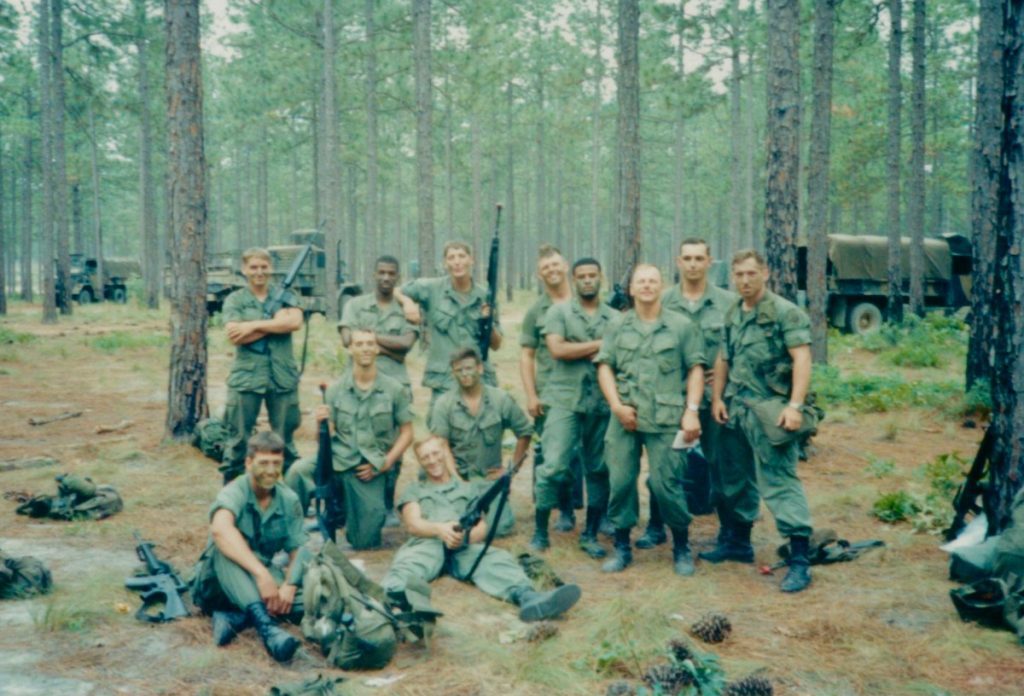
Soldiers come and go from platoons. On one occasion while leading a platoon in the 82d Airborne Division, we received a new soldier, fresh from truck driver and airborne schools. He was apparently a bit nervous, but also a bit cocky. This was not a bad combination, it was one the Platoon Sergeant, and I could easily deal with to integrate him effectively into the platoon.
Unfortunately for him, to cover for his discomfort, he had a congenital need to talk about himself when he was nervous. He just would not shut up; he constantly told detailed stories about his very youthful and unexciting life! After a while the platoon members were tired of his constant chatter and launched him into our office to share his stories with us, the Platoon Leader and Platoon Sergeant.
As a side note, back in those days, the platoon office was a condemned, single-wide trailer resting on cinder blocks, located in our gravel motor pool. There was a square foot hole in the floor just as you opened the door. We never fixed it as their yells of surprise or curses was our ‘tripwire’ to notify us when guests visited. Life as a paratrooper was tough. I understand conditions in the 82d have improved since then.
Enough is Enough
One particular afternoon we also had had enough; we too couldn’t take his stories anymore! After kicking him out of the office, I directed the Platoon Sergeant to “fix this, I don’t want to hear his shit anymore!” My Platoon Sergeant, a hardcore paratrooper who had grown up in the platoon, was only happy to oblige; eager I might add.
The unfortunate soldier found himself assigned to every overnight field mission that could be found – there was always too many. After a month and a half, without a day off, he stopped talking. We gathered that he felt like a ‘blued’ member of the platoon. He was no longer this shiny, talkative, fresh and nervous soldier. Like all the troopers in the platoon, he was tired, worn out, streetwise, slightly paranoid and quiet. Apparently, he found his comfort place in the unit and had no need for his verbal diarrhea. The back-to-back missions stopped, we saw him around the motor pool more frequently, and he got along with the rest of the platoon; he turned out to be a wonderfully dependable and talented soldier.
I guess there are a couple leadership lessons to be learned. For the more senior, mature leaders one can deduce some wisdom about tough love, about fast ramping employees into the mainstream of the workplace; or, at a more craven level, projecting discomfort on others to relieve your own. At the more junior level, the best lesson to learn from this short story is that if you have a problem, turn to your Platoon Sergeant, he’ll/she’ll fix it!
A wise friend and leader once told me ‘if you have a problem you can’t solve, put an Non-Commissioned Officer (NCO) between you and the problem and the problem will go away.’ Smart man.
Interesting Links
- If you enjoyed this ‘Leadership’ article, link here to our others
- for more “Soldier’s Stories”
- See a few of our leadership and management articles posted in Linkedln
Want to offer comments, the form below is for YOU!





Really impressed with the layout and the options available here. It feels very professional and the load times are incredibly fast. Cheers for the great service! lafija
Thank you, I hope you find the contents of value. Cheers.