
Low standards, immature leadership
Leadership Maturity 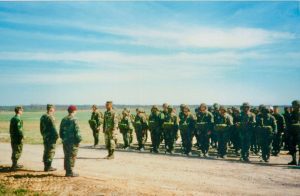
It’s strange how some minor, seemingly trivial memories remain with us long after they occurred. One must conclude that deep down, they actually hold some value that sways our outlook today. I vividly recall one such memory highlighting my low standards and immature leadership at the time. It should deserve no recollection, but it does.
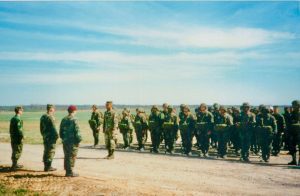
I had the honor of serving as the leader of an incredibly talented and dynamic detachment in a special operations unit. One afternoon I was engaged in a deep conversation with my assistant operations NCO. He was a smart and enthusiastic paratrooper who was helping me devise a successful strategy to solve some problem or other. I was grateful for his insights and energies.
We were wrapping up the discussion while standing in the doorway of the back of our hanger. He was an avid smoker and stood outside the door, while I stood in – like a good Solider, he didn’t smoke in the building. However, when he finished, he threw the cigarette butt on the ground and stepped on it, along with what I just realized was a pile of old butts. The back door to our hanger was an ashtray…I found this disgusting. He knew better than to trash our home, so did I.
However, because I was thankful for his efforts, rather than jump in his ‘shit’ (‘on the spot correction’) I just walked away to carry on to the next issue. Just like that, throwing crap on the ground in our unit area became the new standard. Bad move! Internally I knew it was wrong, but I couldn’t see how I could chastise him without dampening his enthusiasm to continue to do a good job. I was still an immature leader.
Whittling away the bad from the good
Experiences like this teach us how, as leaders, to differentiate between a person’s behavior and their person. This allows you to show genuine appreciation and encouragement for a soldier while simultaneously correcting poor, temporary behavior. The distinction is key. Although we are made up of our actions, not every individual action characterizes us.
A good leader rarely chastises or corrects a person but tries to modify their poor behavior or unacceptable actions. A person can change their behavior, but can’t change who they are (although, in time, their changed behavior will change them). A good leader can whittle away at the poor behavior while preserving the good ones….and help create incredible soldiers.
But it takes maturity in leadership to understand that, and experience to figure out how to do it. It took me a few more years to figure this out; but, the dump of cigarette butts WAS cleaned up by close of business that day! Perhaps the trivial memory is not so trivial.
Interesting Links
- If you enjoyed this article on Immature Leadership and Standards , link here to our others
- See a few of our articles posted in Linkedln
Want to offer comments, the form below is for YOU!