The Accidental Leader in us all
The Accidental Leader
Workplaces are saturated with executives, managers, supervisors, and even, the accidental leaders. The accidental leader often evolves into an informal leader influencing many of the opinions and actions of the workplace; sometimes even more dominantly than those in positions designed to do so. Appointed (formal) leaders fail to appreciate how Informal Leaders influence the workplace at their own expense.
We commonly appreciate that our formal leaders are always under the microscope and their words and actions (intentional or otherwise) encourage or discourage our engagement in our organization’s goals and objectives. In part, through their interactions, we either become part of the solution, neutral (just checking the boxes) or find ourselves as the obstacle to organizational success.
However, our engagements are not limited only to the influences of our formal leaders. The informal (or accidental) leaders may be just as influential on how we perform at work. Without realizing it, you may even be one of those informal leaders. Sometimes we don’t appreciate how much of an influence we have on others, how much we are guiding other’s actions and behaviors. It’s worth a period of self-reflection to consider if you are an informal leader. If you are a formal leader do informal leaders figure as influential nexus within your workplace?
Accidental Leadership in Action
I’m reminded of an experience and the unexpected influence on our surroundings as four junior leaders. Years later, I’m still chagrined for our lack of awareness.
We were engaged in a training event evading a platoon of paratroopers tracking us to capture us. It was an emotionally and physically charged event.
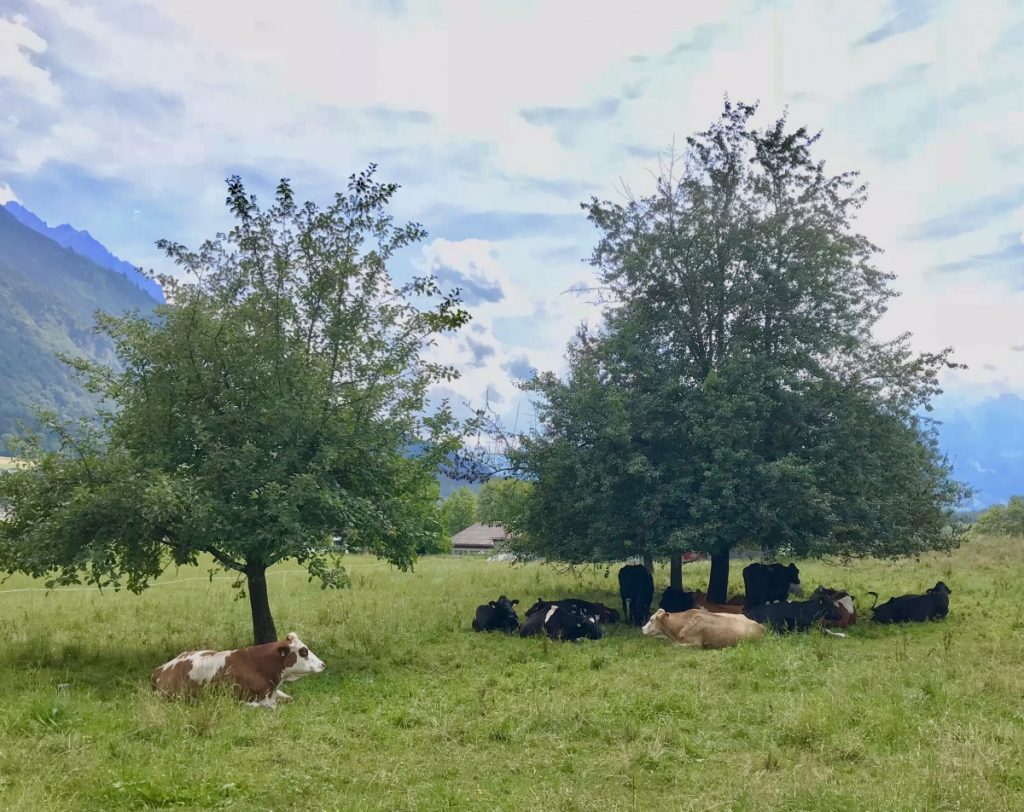
One evening we found ourselves crossing a fenced-in field to reach a designated rendezvous point. We climbed through the barbed wire and noted a herd of cows grazing nearby. As we entered their ‘workplace’, they inclined their heads and looked our way with curious eyes and twitching ears. As we slowly worked our way across their field, some of the cows began to follow us. I guess our ‘followers’ wanted to attract their buddies attention, so they ‘mooed’ in a distracted way. Not wanted to draw attention to ourselves we walked faster to put some distance between us. The cows responded by matching our speed, and their ‘mooing’ cries grew louder. This was not good; we were trying to avoid attention.
Taking Leadership to the Next Level
Out of a reflexive response, we began to jog across the field, so did the cows. At this point we became worried. Not only did we have a platoon of paratroopers looking for us, but now we had a herd of cows chasing us through their field.
Thoughts of the embarrassment of failing the course by being unceremoniously trampled by a bunch of masticating cows became a serious concern. At this point, we were a little intimidated. With the hopes we could outrun the cows (stupid us!), we threw caution to the wind and made a hasty, desperate sprint to the far side fence-line. The cows were game! They too made the mad dash to the other fence-line, hot on our footsteps, snorting and ‘mooing’ along the way.
We made it, barely. We scurried our way through the barbed wire just in time to avoid being stomped by the worked-up herd. On the other side, we fell to our knees and backs catching our breaths, while laughing and cursing under the same breaths. We didn’t understand what happened or why it happened, but just felt lucky to make out of that field alive! None of us had any idea cows could run so darned fast! We had even less of a clue why they were interested in us.
Concerned that we made so much of a commotion crossing the field, we quickly rose and crept into the nearest tree line avoid further attention and detection.
Accidental Leaders = Informal Leaders
As time passed, I reflected on what happened and why. I could only guess that because cows are inquisitive, a few members of the heard found our activities interesting. They thought we were there to either feed, or harm them. Without intention or realization, we attracted their attention. Because they have strong group instincts the interacting, or ‘engaged,’ cows captured the attention of the rest of the herd. Every action we made was observed and influenced a response. When we walked, they walked, when we jogged, they jogged, when we sprinted we activated their stampede impulses. With no intention or desire to do so, we lead those cows harder and faster across that field then they’d ever done before. That night, we were the accidental and informal leaders in that field.
Your Workplace?
So, why is this old soldier story relevant? First, I don’t mean to suggest that cows inhabit your workplace. However, if your incidental actions can influence beasts in a field, it can also influence your more intuitive and sensible work colleagues. If we had taken the time to learn more about the characteristics of what motivates cows, we would have had a better appreciation of what was about to transpire as soon as we stepped into their ‘workplace.’
Had we intended to lead cows across a field, we succeeded incredibly well. If, it is your goal to become a more valued and appreciated employee, then developing a better appreciation of the natural influences you wield in the workplace is a good start towards that aim. From there, learn what motivates the ‘cows’ and intentionally lead them across an open field. If you do this well, you may transition from an accidental leader to an aware, informal leader. If you can align the effects of your informal influence with your company’s goals and objectives, you may be recognized and find yourself with new opportunities to transition from an informal leader to a formal leader within your organization.
By the way, in spite of our noisy escapades across the field, the paratroopers never captured us. It was a liberating experience in several ways.
Interesting Links
- A version of this article is also posted on Linkedln, published on 13 Mar 2019 https://www.linkedin.com/pulse/accidental-leader-darren-zimmer/
- If you enjoyed this article on Informal Leaders influence the workplace, link here to our others
- See a few of our articles posted in Linkedln
Want to offer comments, the form below is for YOU!